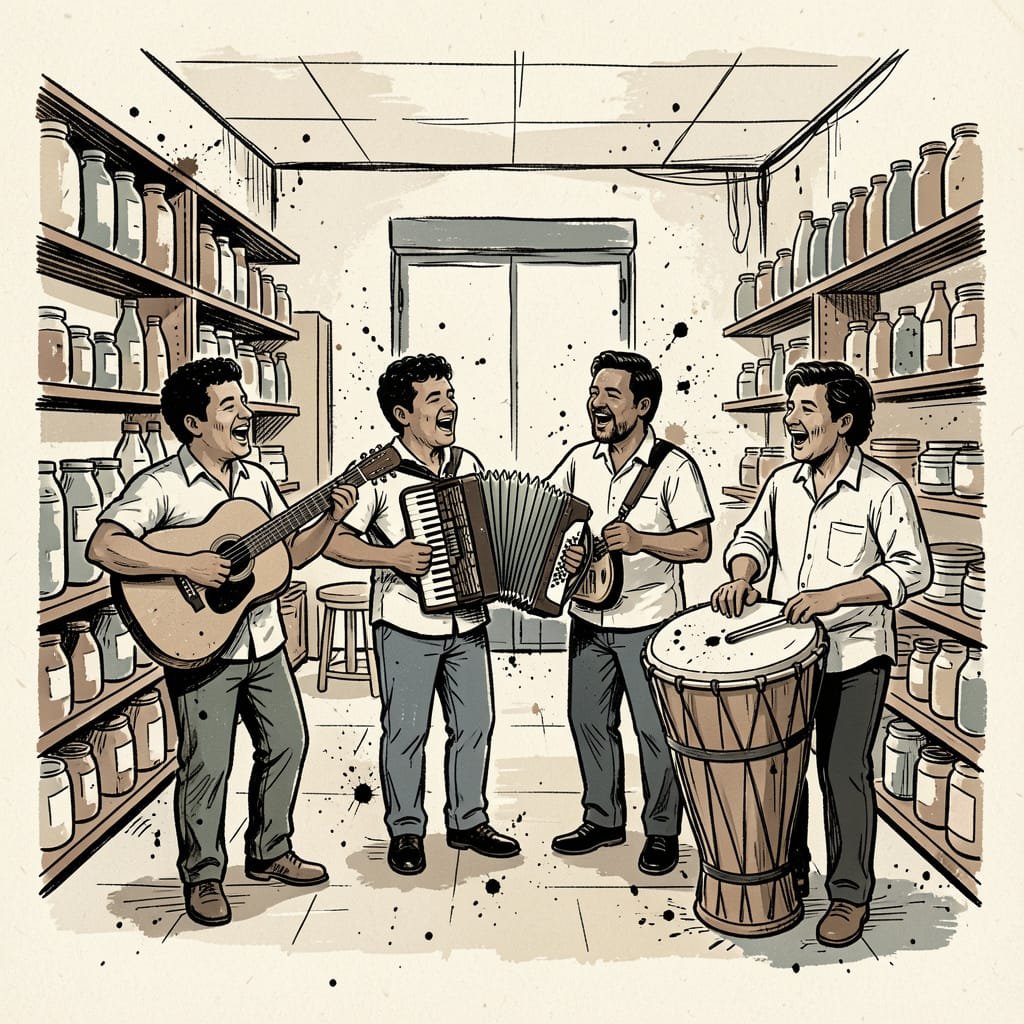
There's a sound that anyone staying in Río San Juan over a weekend eventually hears drifting in from a distance: a fast, syncopated accordion, backed by a metallic scraping sound, a drum keeping time and, at times, a guitar weaving in a melody. Just a few kilometers from the center, toward the rural interior, is where it comes from: merengue típico, the oldest and most authentic form of the musical genre that symbolizes the Dominican Republic, still alive today in the country colmados that, every weekend, turn into small open-air dance halls.
Merengue, the national soundtrack
Merengue isn't just a musical genre: it's one of the country's strongest identity markers, to the point of being declared UNESCO Intangible Cultural Heritage of Humanity in 2016. It emerged in the mid-1800s from a fusion of African, European and Taíno influences, and has since accompanied Dominican daily life at every level: parties, weddings, election campaigns, religious celebrations, and — just as often — an ordinary evening at the local bar.
Two souls of the same genre
What most visitors know is merengue de orquesta: horns, elaborate arrangements, professional backing vocals — the stage-and-radio version, made famous worldwide by artists like Juan Luis Guerra or Johnny Ventura. But there's an earlier, more rural form, merengue típico (also called perico ripiao), which is the one that still survives today in the inland areas around Río San Juan: faster, more improvised, built around just three instruments — acordeón, güira (the metal scraper of Taíno origin) and tambora (the two-headed drum of African origin). It's a lineup that literally sums up, in a trio of instruments, the three souls of Dominican culture: European, Taíno and African.
Perico ripiao: a name, a story
The name has a curious origin: it reportedly comes from a mid-1800s venue — a "perico ripiao," according to some accounts a brothel — where this music was played before it became respectable. Despite censorship attempts over its provocative lyrics at the time, the genre survived, and during the Trujillo years (1930-1961) it was even promoted to national symbol and broadcast on the radio. But its cradle remains the rural Cibao region, around Santiago, and it's in settings like the inland countryside around Río San Juan that merengue típico still keeps its most genuine form today, far from the big stages.
Siblings, not twins: perico ripiao and vallenato
Merengue típico often gets compared to vallenato — and it's a comparison that makes sense, but needs clarifying. Vallenato isn't Dominican: it comes from Colombia's Caribbean coast, around Valledupar. The two genres really are "musical siblings": both were born around 1870 with the arrival of the accordion, brought by German traders, and both put the instrument at the center of the sound. But the instruments that accompany it differ — perico ripiao uses güira and tambora, vallenato uses raspa and caja — and so does the rhythm: Dominican merengue típico is in binary time (4/4), Colombian vallenato more often in ternary time (6/8). Given how similar they can sound, the two names sometimes get used interchangeably by non-specialists — but for anyone writing about Dominican music, it's worth keeping them distinct.
Good to know
- UNESCO heritage: merengue has been Intangible Cultural Heritage of Humanity since 2016.
- Three instruments: acordeón, güira and tambora — the European, Taíno and African souls of Dominican culture.
- Not to be confused with: Colombian vallenato, a "sibling" genre but distinct in instruments and rhythm.
- Where to hear it: in the colmados of the rural areas around Río San Juan, on weekends.
The countryside around Río San Juan, where perico ripiao is still alive
Head inland from the center of Río San Juan — toward spots like Hobo Dulce, La Novilla or Bejuco Alambre, in the rural interior of María Trinidad Sánchez province — and you cross a landscape of wide green spaces, partly grazing land and partly left uncultivated. Here and there, between one field and the next, a small pueblo appears: a few scattered houses at first, growing denser as you approach the center of the settlement. The roads, increasingly white and unpaved, are almost always lined with one or two colmados — the neighborhood store where people do their daily shopping.
But on weekends, those same colmados change character: they become genuine open-air dance halls, where people gather to have a drink, dance or simply listen to music. It's there, more than in any theater or organized festival, that you feel the real popular musical culture of the Dominican Republic: an accordion playing live or through a sound system, people dancing merengue típico on the dirt road in front of the colmado, a weekly ritual repeated for generations, far from tourist circuits.
What this means for anyone visiting Río San Juan
The beaches and the Gri-Grí Lagoon remain, rightly, the main reason people come to Río San Juan. But anyone wanting to discover something more authentic — the same spirit that turned the town from a fishing village into a tourist destination without losing its roots — can find it right in these rural areas, in a country colmado on a Saturday night, with the accordion of merengue típico playing in the warm north-coast air.
Frequently asked questions
What is merengue típico or perico ripiao?
It's the oldest, most rural form of Dominican merengue, born in the Cibao in the mid-1800s and played with acordeón, güira and tambora — unlike merengue de orquesta, the more modern version with horns and stage arrangements.
Why is it called "perico ripiao"?
The name reportedly comes from a mid-1800s venue where this music was played before it became respectable; despite censorship attempts at the time, the genre survived to this day.
What's the difference between merengue típico and Colombian vallenato?
They're "sibling" genres, both born around 1870 with the arrival of the accordion, but distinct: Dominican merengue típico uses güira and tambora in binary time (4/4), while Colombian vallenato uses raspa and caja, more often in ternary time (6/8).
Where can you hear live folk music near Río San Juan?
In the rural inland areas of the municipality, where on weekends the village colmados turn into open-air dance halls with live or recorded music — an authentic experience, away from organized tourist circuits.
Want to experience Río San Juan like a local?
We're happy to point our guests to where to hear live music, from country colmados to authentic evenings far from tourist circuits.
Message us on WhatsApp